
Sister site
A·I·AM — Agentic Innovation in Advanced Materials


Graphene and two-dimensional materials, from fundamental science to working applications.
Composites and coatings, sensors and MEMS devices, biomedical materials and water purification, at the Department of Materials and the National Graphene Institute, The University of Manchester.
A·I·AM — Agentic Innovation in Advanced Materials
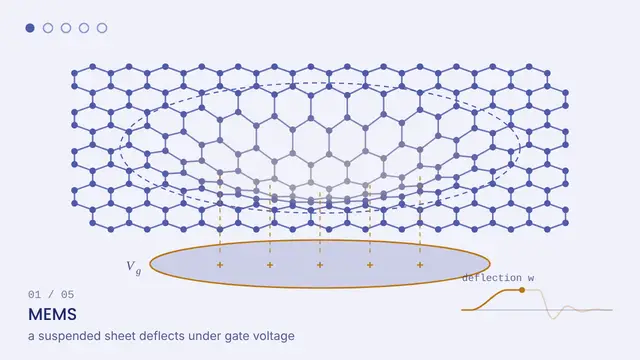
The Nanofunctional Materials Group has a new website: https://nanofun.uk It brings together what we do at the Department of Materials - University of Manchester, Graphene - The University of Manchester and Henry Royce Institute at The University of Manchester and The University of Manchester Faculty of Science and Engineering: • Research: six themes, from #graphene for water purification to polymer composites, MEMS sensors and biointerfaces • Publications: updated automatically from ORCID • People: current PhD students and researchers, and alumni since 2011 • Sustainability: how our work links to the UN Sustainable Development Goals, and our #LEAF Bronze lab • News: from this LinkedIn feed and the AIAM Substack If you’re interested in a PhD, a project or working together, the Join page explains how to get in touch. Thank you to everyone in the group, past and present, who helped put it together. #Graphene #Nanomaterials #MaterialsScience #UniversityOfManchester #NationalGrapheneInstitute
View on LinkedIn : post of 3 November 2026A free, open-source tool for homes with solar, a battery, an electric car or a heat pump. Alpha testers wanted.
Read on Substack : WattDate: plan a whole year of your home on every Octopus tariffAn afternoon experiencing Physics, Passion and Persistence! 🔬✨ A fascinating visit to the National Graphene Institute (NGI) at The University of Manchester, organised by TiE Manchester. Graphene was first isolated right here in Manchester in 2004, and the NGI is truly a pride of Manchester! 🐝 I've visited NGI a few times before, but what made this visit special was seeing how far the research and innovation have progressed, and the sheer passion of the people behind it. A huge thank you to Prof. Aravind Vijayaraghavan, who patiently took us through a detailed tour, explaining the science, the engineering, the breakthroughs and the possibilities. 🙌🏻 And his most simple and memorable instruction? "Don't touch anything!" (dramatic pause) "In fact, don't touch anything!" … Absolutely loved it. Message received, Professor! (Especially as I have a bit of Frank Spencer in me! 😁) It was also wonderful to rekindle my love for physics, especially alongside my friend Raam S., past President of TiE Manchester, who brought his deep engineering and materials science perspective to our conversations. A lovely exchange of ideas, curiosity and a shared passion for science! Equally inspiring was meeting some brilliant PhD researchers from India and hearing about collaborations with leading Indian institutions, including the IITs and IISc. Another reminder of how science and innovation connect talent and ideas across borders. 🇬🇧🇮🇳 What stayed with me was not just the extraordinary science, but the curiosity, patience and persistence of people like Prof Aravind, who dedicate themselves to turning scientific discovery into real-world impact. After all, breakthroughs don't happen overnight. They happen because people refuse to stop asking questions. A big thank you to my friend Sunil Mohindra, Chair Emeritus and a past president of TiE Manchester for the invite, and the entire TiE North team for organising such an enriching visit. Do read about NGI here: https://lnkd.in/gx4Wurki #India #UK #Tech #Creative #Storyteller | Graphene - The University of Manchester
View on LinkedIn : post of 29 October 2026At the rates in force on each day, staying on Go all year would have cost 5% less than my two switches, and the best dates in hindsight 8% less.
Read on Substack : When to switch between Octopus Cosy and Intelligent Go: a year of data and a battery plannerIn a year my Salford house generated 9,109 kWh of its own solar, about 60% of all that the house, heat pump and EV used. Sunshine (r = 0.89) and cold (r = 0.90) explain most of the year.
Read on Substack : A year of living green with solar, battery, heat pump and EV: what 365 days of data sayWe welcome enquiries from prospective PhD students, postdoctoral researchers and visiting researchers.
Our group contributes to a sustainable planet and future through research and development of technologies for water purification, lightweight and multifunctional materials, energy generation and storage, and health and wellbeing.
Together, our research themes contribute to these UN Sustainable Development Goals; each theme page shows its own.



More on the goals at the United Nations Sustainable Development Goals site. The content of this publication has not been approved by the United Nations and does not reflect the views of the United Nations or its officials or Member States.
Contact: contact@nanofun.uk